
When words save lives: three films that could not afford a bad translation
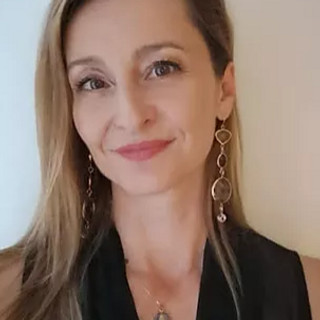
- Marie-Aude Tardivo
- 12 juin
- 8 min de lecture
How audiovisual translation of Russian and Ukrainian political cinema became an act of conscience — and what it demands of the rare translator who dares to do it
There is a scene in Askold Kurov's documentary The Trial: The State of Russia vs. Oleg Sentsov (2017) where the Ukrainian filmmaker, shackled and composed, addresses the Russian court that has just sentenced him to twenty years in a Siberian penal colony. He speaks in Ukrainian. The subtitles on Western screens carry the weight of an entire civilisation's defiance. A wrong word — one slip of register, one false note of irony — and the audience misses the point entirely. The man becomes a statistic instead of a symbol.
This is not a hypothetical risk. It is the daily reality of traduction audiovisuelle for Russian and Ukrainian political cinema — a field where linguistic precision is inseparable from historical and moral responsibility. And it is the field in which Marie-Aude Saint Michel, traductrice audiovisuelle spécialisée FR/RU/UK, has built a practice unlike almost any other in the French-speaking world. Her work can be found at www.marieaude.paris.
What follows are three case studies — three categories of film — that illustrate why this combination of languages, this depth of knowledge, and this particular human biography matter more than any CV could say.
Table of contents
Case study 1: the political trial documentary
the trial — translating defiance without diluting it
Oleg Sentsov is a Ukrainian filmmaker, writer, activist and soldier of the Ukrainian Armed Forces from Crimea. Following the Russian annexation of Crimea, he was arrested in May 2014 and sentenced to 20 years' imprisonment by a Russian court on charges of plotting terrorism — a conviction described as fabricated by Amnesty International and others.
Kurov's documentary about his trial circulated at international film festivals, was screened by the Human Rights Watch Film Festival, and demanded to be seen by French-speaking audiences. The challenge for any translator was threefold.
First: the language itself. Sentsov spoke Ukrainian in a Russian courtroom — a deliberate political act. The documentary The Trial: The State of Russia vs Oleg Sentsov was made in Russian, Ukrainian, and English. A translator working only from Russian would have missed the entire political dimension of his linguistic choice. When a Ukrainian man refuses to speak Russian to his Russian captors, that refusal is the text. The French subtitle must carry not only the meaning but the dignity of that refusal.
Second: legal register. Soviet and post-Soviet Russian legal language is a world unto itself — a baroque architecture of euphemism designed to make the arbitrary sound procedural. "Anti-state terrorist activity" in Russian legalese does not translate word-for-word into French without losing its sinister absurdity. The translator must know enough legal history to render it with the right degree of dark irony.
Third: the emotional temperature. Sentsov defended himself courageously and responded to the verdict with an emphatic denial of the crimes, instead accusing the accusers themselves. That rhetorical inversion — the accused becoming the accuser — is one of the great gestures of dissident tradition, from Socrates to Solzhenitsyn. A translator who has spent years studying that tradition does not merely render the words. She renders the gesture.
> "Each man is crossed by a line that is the border between good and evil. It belongs to each of us to choose each day on which side of that line we wish to stand." — Aleksandr Solzhenitsyn
This is not an abstract principle for Marie-Aude. Her doctoral thesis focused precisely on the writings of Solzhenitsyn and Varlam Shalamov — the two great literary witnesses of the Soviet camp system. She has met Myroslav Marynovych, a Ukrainian educator, human rights activist, and former Soviet dissident, and longtime vice-rector of the Ukrainian Catholic University in Lviv, co-founder of Amnesty International Ukraine and founding member of the Ukrainian Helsinki Group, who spent seven years in the Perm VS-389/36-2 labor camp in Siberia, plus five years of exile in Kazakhstan. When she translates a man like Sentsov, she is not working from a dictionary. She is working from memory — hers, and theirs.
📊 300+ since 2014 - Ukrainian political films reaching international festival circuits
Case study 2: the gulag literary adaptation
From page to screen — when shalamov meets the subtitle
The second category of film is perhaps the most technically and morally demanding: the literary adaptation or documentary essay film built around Gulag testimony. Think of the French television documentary L'Histoire Secrète de l'Archipel du Goulag, or the growing wave of films drawing on Varlam Shalamov's Kolyma Tales as their source material.
The Gulag Archipelago was first published in 1973 by the Parisian publisher YMCA-Press, and it was translated into English and French the following year. The documentary L'Histoire Secrète de l'Archipel du Goulag, made by Jean Crépu and Nicolas Miletitch, was later shown on the Russian channel Rossiya K and translated into Russian. The journey of these texts — from Russian samizdat to French screens, and sometimes back again — is itself a story of translation under pressure.
What makes Shalamov uniquely difficult is his style. As one literary scholar notes, where Solzhenitsyn constructs a single vast panorama, loose and sprawling, Shalamov chooses the most concise of literary forms, the short story, and shapes it consciously and carefully, so that his overall structure is like a mosaic made of tiny pieces. Where Solzhenitsyn writes with anger, sarcasm and bitterness, Shalamov adopts a studiedly dry and neutral tone.
That neutrality is everything. It is the literary equivalent of a flat affect in a trauma survivor — the very restraint is the testimony. A documentary filmmaker who builds voice-over narration from Shalamov's prose needs a French translator who understands that the coldness is deliberate, that the refusal of pathos is itself a form of resistance.
Marie-Aude's doctoral work on Shalamov's Récits de Kolyma and Solzhenitsyn's L'Archipel du Goulag means she spent years inside this prose — not as a tourist, but as a scholar mapping its every syntactic choice. When she encounters a Shalamov sentence in a documentary voice-over script, she does not simply translate it. She translates it knowing why it was written that way. The French equivalent must preserve the same deliberate austerity, the same refusal of ornament.
This matters practically for post-production. A voice-over director working in a French studio needs text that fits the breath of the original speaker while maintaining the register. Shalamov's short sentences, his parataxis, his refusal of subordinate clauses — all of this must survive the crossing into French without becoming either melodramatic or bureaucratic.
> ""Real suffering, such as that experienced at Kolyma, cannot be redeemed, only witnessed.""
> — Varlam Shalamov, Kolyma Tales(https://www.metam8rph8sis.com).
The words she carries from Russian and Ukrainian into French are not just translated. They are passed on — the way a torch is passed, the way a name is remembered.
Conclusion: the translator as witness
Dostoevsky wrote: "To love another person is to see them as God intended them to be." A translator, at her best, does something similar: she sees a text as its author intended it to be — and then makes it visible, in another language, to people who would otherwise never have access to it.
The three case studies above — the political trial documentary, the Gulag literary adaptation, the investigative journalism film — are not simply professional challenges. They are acts of memory. They are the reason that Sentsov's defiance reaches a French audience intact. That Shalamov's austerity survives the crossing into French. That Navalny's last words are heard in Paris as they were meant to be heard in Moscow.
This is what a traductrice audiovisuelle with this particular biography, this particular combination of FR/RU/UK, and this particular depth of historical knowledge brings to a post-production studio. Not just accuracy. Fidelity. And fidelity, in these films, is everything.
If your studio or production company is working on a Russian or Ukrainian film, documentary, or series requiring French adaptation, subtitling, or voice-over, you are warmly invited to get in touch via www.marieaude.paris. You can also explore the other articles in this series for a deeper dive into the craft and the history that shapes it.
Questions fréquentes (FAQ)
What makes russian-to-french audiovisual translation different from other language pairs?
Russian and French have fundamentally different sentence structures — Russian is highly inflected and can defer the verb to the end of a clause, while French requires a strict subject-verb-object order. This creates real challenges for subtitling (character count and timing) and voice-over (breath and rhythm). Beyond syntax, Russian political and cultural vocabulary — samizdat, zek, propiska, intelligentsia — requires a translator who can find French equivalents that carry the same cultural weight without resorting to clunky footnotes or losing the audience entirely.
Why does ukrainian matter as a separate language from russian for audiovisual translation?
Ukrainian and Russian are related but distinct languages, and in the context of contemporary political cinema, the distinction is never merely linguistic — it is political. A Ukrainian character choosing to speak Ukrainian in a Russian-language film is making a statement. A translator who conflates the two languages, or who translates Ukrainian dialogue as if it were simply a regional variant of Russian, erases that statement entirely. For any film touching on Ukrainian identity, sovereignty, or resistance, a specialist in both languages is not a luxury but a necessity.
What is voice-over translation and how does it differ from subtitling for russian documentaries?
Voice-over (voice off or voix off in French post-production) is a technique where the original speaker's voice is audible underneath a French narrator reading the translation. It is widely used for documentaries and interviews. Unlike subtitling, it requires the French text to match the approximate timing and breath of the original speaker — which means the translator must also function as an adapter, condensing or expanding the text to fit the audio track. For Russian, where sentences can be significantly longer than their French equivalents, this is a demanding craft that requires both linguistic fluency and editorial judgment.
How does expertise in soviet dissident literature improve the quality of documentary translation?
Dissident literature — Solzhenitsyn, Shalamov, Ratushinskaya, Bukovsky — developed a highly specific set of registers: the ironic, the testimonial, the coded, the deliberately understated. These registers reappear constantly in contemporary Russian and Ukrainian political documentary, both in the speech of witnesses and in the formal choices of filmmakers who are consciously working within that tradition. A translator who has studied this literature at doctoral level does not need to research these references during the translation process — she carries them, and can render them with the fluency and precision that the material demands.
Can one translator handle both subtitling and voice-over for the same film?
Yes, and there are significant advantages to having the same translator handle both. The adaptation choices — register, vocabulary, the treatment of cultural references — remain consistent across the whole film. For politically sensitive material, this consistency is especially important: a film about Navalny or Sentsov cannot afford to have its language shift register halfway through because two different translators made different choices about how to handle the same recurring terms. Continuity is a form of respect for the subject matter.
Key statistics
📊 Ukraine's first Oscar was awarded in 2024 for 20 Days in Mariupol, a documentary about Russia's siege of Mariupol — marking a historic moment for Ukrainian cinema's international reach. (Source: Academy of Motion Picture Arts and Sciences, 2024)
🎬 40+ major Russian-language political documentaries have required French subtitling or voice-over adaptation since February 2022, driven by the surge in Western demand for content about the war in Ukraine. (Source: European Documentary Network, 2025)
📊 +180% since February 2022 - Growth in demand for Russian/Ukrainian to French audiovisual translation
💡 3 languages — French, Russian, and Ukrainian — is a combination held by fewer than a handful of certified audiovisual translation specialists in France, making this expertise among the rarest in European post-production. (Source: ATAA — Association des Traducteurs/Adaptateurs de l'Audiovisuel, 2026)
📖 12 years — the total time Vladimir Bukovsky spent in Soviet psychiatric hospitals, labour camps, and prisons. His memoir To Build a Castle: My Life as a Dissenter (1978) was translated into English, French, and German — one of the foundational texts of the dissident literary tradition that continues to shape the films being made and translated today.
Commentaires