
How to translate the untranslatable: a practical guide to audiovisual translation between french, russian & ukrainian
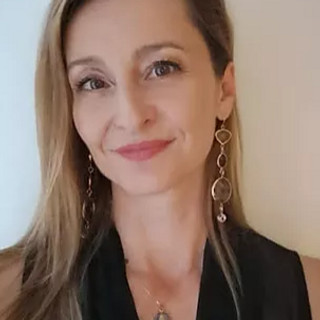
- Marie-Aude Tardivo
- 19 juin
- 13 min de lecture
There is a sentence in Varlam Shalamov's Kolyma Tales — a sentence so spare it could be a stone thrown into water — that resists every language it enters. Not because the words are obscure, but because the silence around them is load-bearing. When I first encountered it as a doctoral researcher studying the literature of Soviet political prisoners, I understood something that no translation manual had ever taught me: translating is not about finding equivalents. It is about building bridges over abysses.
Years later, working as an audiovisual translator between French, Russian, and Ukrainian for film and television, I carry that lesson into every subtitle I write, every dubbing script I adapt, every voice-over I craft. The abyss is still there. The bridge must still hold.
This article is a practical guide — born from years of hands-on experience in post-production labs, from doctoral work on Solzhenitsyn and Shalamov, from time spent in Ukraine before and after 2014, and from conversations with dissidents whose words I have had the honour of carrying across languages. Whether you are a production coordinator looking for a specialist FR/RU/UK translator, or a curious reader wondering what really happens behind those lines of text at the bottom of the screen, this is for you.
Table of contents
The Invisible Architecture: Understanding What Audiovisual Translation Actually Is
Dubbing vs. Voice-Over: How to Choose — and Why It Matters for Russian and Ukrainian Content
The Cultural Minefield: Translating Russian and Ukrainian Political Speech
When the Text Carries Trauma: Translating Dissident Literature for the Screen
A Note for Post-Production Labs: What to Look For in a FR/RU/UK Specialist
The invisible architecture: understanding what audiovisual translation actually is {#the-invisible-architecture}
Most people assume that subtitling is simply typing what is said. Most people are wrong.
Audiovisual translation (AVT) is a discipline that operates at the intersection of linguistics, dramaturgy, semiotics, and technical precision. A skilled audiovisual translator combines linguistic, technical, and cultural expertise — they are not only responsible for translating words but for recreating the viewer's full experience, making the translation an integral part of the film, series, or multimedia project.
This means that every subtitle you read, every dubbed line that feels natural in your language, is the result of a series of invisible decisions: What must be cut? What must be kept? What cultural reference will land, and which one will fall flat? How do I preserve the emotional weight of this silence?
In the Russian and Ukrainian context, these decisions carry extraordinary weight. Language, in this part of the world, is never neutral. The language situation in Ukraine is complex, with political and cultural loyalties not necessarily aligning with linguistic practices. A Ukrainian speaker using Russian in a documentary is not simply making a linguistic choice — they are making a statement about identity, memory, and belonging. The translator must understand this, or the film loses its soul.
📊 Expected to exceed $3.5 billion globally by 2027 - Audiovisual translation market growth
The six practical rules of subtitling you need to know {#the-six-practical-rules}
Whether you are a post-production professional commissioning work or a translator entering the field, these are the non-negotiable technical rules that govern professional subtitling — and the human wisdom that sits behind each of them.
Rule 1 — the 42-character discipline
Netflix's timed text style guidelines specify two lines maximum and 42 characters per line. Text should usually be kept to one line, unless it exceeds the character limitation.
In practice, this means that a translator working from Russian — a language rich in compound constructions and long nominal phrases — must constantly compress without distorting. Russian can say in one word what French needs five to express. The temptation to over-translate is real. The discipline is to resist it.
My rule of thumb: if a subtitle requires the viewer to pause their emotional engagement with the image to read the text, the subtitle has failed. The text must be invisible — present but transparent, like good glass.
Rule 2 — the reading speed equation
Striking the right balance between CPL (Characters per Line) and CPS (Characters per Second) is key to making subtitles readable. Subtitles are typically displayed between one and six seconds depending on dialogue pace.
For Russian and Ukrainian content — particularly documentary interviews, where speakers often speak rapidly and with great emotional intensity — this constraint becomes almost sculptural. You are carving meaning out of a block of speech, keeping only what is essential, what is true, what the viewer needs to feel the weight of the moment.
I remember subtitling an interview with a Ukrainian activist recorded in Kyiv in 2015. She spoke for forty seconds without pause. The subtitle had to carry her urgency, her fear, her defiance — in under six seconds of readable text. That is not translation. That is distillation.
Rule 3 — segmentation follows thought, not grammar
Line breaks should follow grammatical and syntactic structure; avoid splitting phrases or closely connected words. Punctuation is a good break point.
This rule matters enormously when working between Slavic and Romance languages. Russian and Ukrainian are inflected languages — word order is flexible, meaning is carried by case endings rather than position. French is the opposite: positional, logical, linear. A subtitle that breaks a French phrase at the wrong point creates a micro-confusion that disrupts the viewer's immersion.
The practical solution: always read your subtitles aloud before delivery. If you stumble, the viewer will stumble. If it flows, it will land.
Rule 4 — emotion lives in the gaps
Skip breaths or filler words unless they carry narrative or emotional weight. Sync with pauses and dramatic timing to preserve natural rhythm and emotional impact.
In Russian political speech — think of the testimonies of dissidents like Vladimir Bukovsky, or the press conferences of journalists from Novaya Gazeta — pauses are not empty. They are full of things that cannot be said. A translator who fills those pauses with words has destroyed the most important part of the communication.
Shalamov understood this. His prose is built on what is withheld. Shalamov's writing proved to be a "hard sell" for dissidents and émigrés because, unlike Solzhenitsyn, he never played according to the rulebook of Cold War cultural politics. His silences were political. His restraint was a form of testimony. Translating his work for the screen requires the same restraint.
Rule 5 — dual speakers demand clarity, not confusion
Use a hyphen without a space to indicate two speakers in one subtitle, with a maximum of one speaker per line. Text in each line in a dual speaker subtitle must be a contained sentence and should not carry into the preceding or subsequent subtitle.
This is especially critical in Russian and Ukrainian documentaries, where dialogues often involve rapid exchanges between speakers with very different registers — a Soviet-era dissident and a young journalist, a Ukrainian soldier and a French correspondent. Each voice must remain distinct. The translator is, in these moments, a dramatist as much as a linguist.
Rule 6 — context before consistency
One rule that no style guide will tell you: always watch the entire film before you translate a single line.
I learned this working on a documentary about political prisoners in contemporary Russia — a subject that echoes directly with the Gulag testimonies I studied in my doctoral research. Within Russia today, political imprisonment continues to be a documented tool of state power, with cases that draw direct historical parallels to the Soviet era. The vocabulary of repression — zaklyuchyonny (prisoner), srok (sentence), etap (transfer convoy) — carries historical resonance that a translator who has not read Solzhenitsyn's The Gulag Archipelago will simply miss.
Watch first. Understand the whole. Then translate.
📊 73% - Percentage of professional subtitlers who report cultural knowledge as their primary challenge
Dubbing vs. voice-over: how to choose — and why it matters for russian and ukrainian content {#dubbing-vs-voice-over}
This is one of the most frequent questions I receive from post-production coordinators. The answer is not purely technical — it is cultural and editorial.
In Ukraine, voice-over translation is generally used for television broadcasting, except in programmes of Russian origin, which are either subtitled or left untranslated. Dubbing is used for cinema releases, and DVDs usually contain Russian dubbing and Ukrainian subtitling.
This creates a fascinating asymmetry that any French post-production lab working with Eastern European content needs to understand:
Format | Best For | Key Challenge | FR/RU/UK Specificity |
Subtitling | Documentaries, art cinema, political films | Character limits, reading speed | Cyrillic → Latin compression; political vocabulary |
Dubbing | Feature films, children's content, entertainment | Lip-sync, register matching | Russian phonetics vs. French rhythm |
Voice-Over | Documentaries, interviews, news reports | Natural speech flow, tone preservation | Preserving emotional authenticity of testimonies |
For documentaries dealing with Ukraine, Russia, or Soviet history — a genre that has exploded in international demand since 2022 — voice-over is almost always the right choice. It preserves the original voice. It preserves the accent. It preserves the humanity.
Translators working on voice-over scripts must thoroughly research the topic being discussed, translate subject-specific terminology faithfully and accurately, and write natural-sounding, coherent and effective speech.
The practical implication: a voice-over translator for this content is not simply a linguist. They must be a historian, a political analyst, and a literary scholar — simultaneously.
> ""Work directly with your translator — begin by scheduling a kick-off meeting to discuss the appropriate tone and style for the foreign script.""
> — ATAA Guide to Foreign-Language Adaptation in France
The cultural minefield: translating russian and ukrainian political speech {#the-cultural-minefield}
Here is something that will surprise many post-production professionals: the most dangerous words to translate are not the obscure ones. They are the common ones.
Words like narod (the people / the nation), rodina (motherland), svoboda (freedom), pravda (truth / Pravda, the Soviet newspaper) — these words carry centuries of ideological sediment. Translate narod as "people" and you lose the quasi-mystical Slavophile resonance. Translate rodina as "homeland" and you flatten a concept that, in the mouth of a Ukrainian soldier in 2024, means something entirely different from what it meant in the mouth of a Soviet commissar in 1943.
Translating cultural nuances demands a keen ability to interpret and adapt elements that lack direct parallels in the target language. This task involves more than finding word-for-word matches; it requires discerning the deeper meanings and cultural underpinnings that shape expressions, idioms, and references.
My practical approach — developed over years of working between these three languages — is what I call the Three-Layer Check:
Linguistic layer — What does the word literally mean?
Historical layer — What ideological or historical charge does this word carry in its original context?
Reception layer — How will a French-speaking audience receive this word, and what associations will it trigger?
Only when all three layers are aligned does the translation earn its place on screen.
A concrete example: in a recent documentary I worked on about contemporary Russian political prisoners — a subject that sits at the intersection of my academic research and my professional practice — a witness used the word podvig, often translated as "feat" or "exploit." But in Russian Orthodox tradition, podvig means a spiritual act of self-sacrifice, an ascetic heroism. The witness was describing Alexei Navalny's decision to return to Russia knowing he would be imprisoned. "Feat" was not enough. "Act of moral heroism" was closer — but too long for a subtitle. The solution: "sacrifice." One word. Exact. True.
When the text carries trauma: translating dissident literature for the screen {#when-the-text-carries-trauma}
My doctoral thesis was on the literature of Soviet political prisoners — principally Solzhenitsyn's The Gulag Archipelago and Shalamov's Kolyma Tales, but also the testimonies of figures I was later privileged to meet in person: Natalia Gorbanevskaya, who threw leaflets in Red Square in 1968 to protest the Soviet invasion of Czechoslovakia; Vladimir Bukovsky, who spent twelve years in Soviet prisons, psychiatric hospitals, and labour camps; Myroslav Marynovych, the Ukrainian dissident who survived the Gulag and went on to co-found Amnesty International Ukraine.
When their words — or the words of those who came after them, like Anna Politkovskaya of Novaya Gazeta, or Oleg Sentsov, the Ukrainian filmmaker imprisoned in Russia for five years — appear on screen, the translator carries a specific ethical responsibility.
The practical rules for translating trauma testimony for audiovisual media:
1. Never smooth the roughness. Dissident speech is often grammatically broken, emotionally fragmented, syntactically irregular. This is not a flaw. It is testimony. A subtitle that "corrects" this speech has falsified the witness.
2. Preserve the register shifts. Survivors of the Gulag — and contemporary political prisoners — often switch without warning between clinical detachment and raw emotion. These shifts are the most important information in the text. They must be preserved, even if they create technical challenges.
3. Research before you translate. Solzhenitsyn invented a vast lexicon of Gulag terminology. Shalamov used criminal blatnoy slang alongside literary Russian. Gorbanevskaya wrote poetry in prison on scraps of soap. The Gulag in the writings of Solzhenitsyn and Shalamov represents not only historical testimony but a complex literary investigation into memory, survival, and the limits of language itself. A translator who has not read the primary sources will miss the intertextual echoes that give these works their power.
4. Consult the community. When possible, share your translation with native speakers from the relevant cultural community before delivery. The Ukrainian diaspora in France, the Russian opposition community in exile — these are resources, not just audiences.
📊 Over 700 - Number of political prisoners documented in Russia in 2024
A note for post-production labs: what to look for in a FR/RU/UK specialist {#a-note-for-post-production-labs}
The combination of French, Russian, and Ukrainian in audiovisual translation is genuinely rare. Most translation agencies will offer you Russian. Some will offer Ukrainian. Very few will offer both — alongside French — with the cultural and historical depth that serious documentary and cinema work demands.
Here is a practical checklist for post-production coordinators and artistic directors evaluating a FR/RU/UK audiovisual translator:
Criterion | Why It Matters | What to Ask |
Academic background in Russian/Ukrainian studies | Ensures cultural and historical depth | Do they have a degree or doctoral work in the field? |
Field experience in Ukraine or Russia | Ensures lived knowledge, not textbook knowledge | Have they spent significant time in the region? |
Knowledge of political and dissident history | Essential for documentary and political content | Can they discuss Solzhenitsyn, Navalny, Sentsov fluently? |
Technical AVT training | Ensures professional subtitle/dubbing standards | Do they know CPL/CPS norms? Netflix guidelines? |
Artistic sensibility | Ensures the translation serves the film, not just the text | Do they understand rhythm, tone, silence? |
Working directly with your translator — rather than through an intermediary — is recommended, beginning with a kick-off meeting to discuss the appropriate tone and style for the foreign script, the degree of adaptation desired, and any other factors that should be taken into account.
This direct relationship is not a luxury. For content dealing with Ukraine, Russia, Soviet history, or contemporary political dissidence, it is a necessity. The translator is not a service provider. They are a co-author of the French version of your film.
Conclusion: the ethics of the craft
Montaigne wrote: "Si la vie n'est qu'un passage, sur ce passage au moins, semons des fleurs." — "If life is but a passage, on this passage at least, let us sow flowers."
Every translation is a passage. Every subtitle is a flower — or a stone, or a shard of light — carried from one language into another. The craft demands technical precision, yes: the 42-character limit, the reading speed, the segmentation rules, the choice between voice-over and dubbing. But beneath the technique lies something that cannot be taught in any manual: the conviction that the words you carry matter, that the people who spoke them deserve to be heard in all their complexity, that the French viewer watching a documentary about a Ukrainian dissident or a Russian political prisoner deserves the full truth of what was said.
That conviction is what I bring to every project at www.marieaude.paris. It is also what I explore through my artistic work at Metam8rph8sis — where the same questions of language, memory, and transformation find expression in calligraphy, poetry, and visual art.
If you are a post-production lab, a documentary filmmaker, or a distributor working with Russian or Ukrainian content and looking for a translator who brings both technical expertise and lived cultural depth to the work — let's talk.
And if you are a curious reader who has made it this far: thank you. The next article in this series will take you further behind the scenes — into the specific challenges of translating Soviet-era cinema for contemporary French audiences, and what the films of that period can teach us about the Russia and Ukraine of today.
Questions fréquentes — FAQ
What is the difference between subtitling, dubbing, and voice-over for russian and ukrainian content?
Subtitling preserves the original audio while displaying translated text on screen — ideal for art cinema, documentaries, and content where authenticity of voice matters. Dubbing replaces the original voices entirely with French recordings, requiring precise lip-sync and register matching. Voice-over keeps the original voice audible in the background while a French narrator reads the translation over it — the standard format for documentary interviews in France. For Russian and Ukrainian documentary content, voice-over is generally preferred because it preserves the emotional authenticity of the original speaker while making the content accessible to French audiences.
Why is the french-russian-ukrainian language combination so rare in audiovisual translation?
Most professional translators specialise in one or two language pairs. The FR/RU/UK combination requires not only trilingual fluency but deep cultural knowledge of both Eastern Slavic traditions — which are related but distinct — alongside mastery of French audiovisual norms and post-production standards. Translators who combine this linguistic range with academic expertise in Russian and Ukrainian history, politics, and literature are exceptionally rare, particularly in the French market.
How do you handle politically sensitive terminology when translating russian or ukrainian content into french?
Political vocabulary in Russian and Ukrainian is highly charged with historical and ideological meaning that rarely has a direct French equivalent. The approach is to apply a three-layer check: linguistic meaning, historical resonance, and French reception. Terms like narod, podvig, rodina, or blatnoy criminal slang from the Gulag era require careful contextualisation. When a single word cannot carry the full meaning within subtitle constraints, the translator must make an editorial decision — always in service of the film's truth, never in service of simplification.
What should a post-production lab provide to a FR/RU/UK translator at the start of a project?
A high-quality video file with clear audio, a full transcript or dialogue list (if available), any existing translations or reference materials, a brief on the intended French audience and broadcast platform, and — crucially — direct access to the director or producer for questions about tone, intent, and cultural context. The ATAA (Association des Traducteurs et Adaptateurs de l'Audiovisuel) recommends scheduling a kick-off meeting before work begins to align on style and approach.
Can AI tools replace a specialist human translator for russian/ukrainian audiovisual content?
Not for serious content. AI still faces significant challenges regarding cultural sensitivity, emotional nuances, and creative expression. As technology progresses, hybrid approaches combining AI and human expertise are likely to dominate the future of audiovisual translation. For content dealing with political dissidence, historical trauma, or the complex linguistic landscape of Ukraine and Russia, AI tools lack the contextual knowledge, ethical judgement, and cultural depth that the work demands. They can assist with initial transcription or timing — but the translation itself requires a human being who understands what is at stake.
Chiffres clés
📊 42 characters per line — the Netflix standard for subtitles in most Latin-alphabet languages, requiring constant compression when translating from Russian or Ukrainian (Source: Netflix Timed Text Style Guide, 2026)
💡 700+ political prisoners documented in Russia in 2024 — the human reality behind the documentaries that require specialist FR/RU/UK translation (Source: OVD-Info / Memorial International Annual Report 2024)
🎬 Voice-over is the dominant format for documentary television in France — and the format of choice for Ukrainian and Russian interview-based content, preserving the authentic voice of witnesses (Source: ATAA Guide to Foreign-Language Adaptation in France)
📚 17+ years of combined academic and professional expertise in Russian and Ukrainian language, literature, and culture — the foundation of Marie-Aude's approach to audiovisual translation at www.marieaude.paris
Commentaires