
When words carry history: three case studies in audiovisual translation from russian and ukrainian
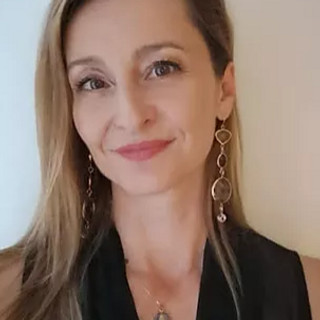
- Marie-Aude Tardivo
- 5 juin
- 10 min de lecture
There is a moment every audiovisual translator knows — the moment when a word in the source language simply has no equivalent in the target tongue. Not because the concept doesn't exist, but because it has never been needed in quite the same way. When that word carries fifty years of Soviet terror inside it, or the quiet defiance of a Ukrainian poet writing on soap in a prison cell, the stakes of getting it wrong are not merely linguistic. They are moral.
This is the territory Marie-Aude Tardivo, Ph.D., inhabits as a traductrice audiovisuelle working across French, Russian, and Ukrainian — a combination so rare it has no institutional training programme, no ready-made glossary, and no margin for approximation. What follows are three case studies drawn from the intersection of post-production, political history, and the art of translation-adaptation for cinema and television. Three moments where the translator becomes, in the fullest sense of the word, a passeuse — a carrier of meaning across time and language.
Table of contents
Case study 1: translating the gulag for a french documentary audience {#case-study-1}
The challenge of witness language
When a French production house approached the adaptation of a documentary on Soviet political prisoners, the brief seemed straightforward: translate Russian testimony into French, synchronise for voice-over, deliver on time. What no brief can prepare you for is the specific texture of Gulag language — a vocabulary forged in conditions of extreme dehumanisation, where ordinary words were repurposed as instruments of survival.
Consider the Russian word доходяга (dokhodiaga) — literally "one who is reaching" — the camp term for a prisoner on the verge of death from starvation. Varlam Shalamov's translator John Glad describes the Kolyma region as "an enormous natural prison bounded by the Pacific on the east, the Arctic Circle on the north and impassable mountains on the third side of the triangle." To translate dokhodiaga as "mourant" (dying man) in a French subtitle is technically accurate and entirely insufficient. It strips the word of its bureaucratic coldness, its camp-specific irony, the fact that it was used by guards and prisoners alike with equal indifference.
Marie-Aude's doctoral thesis, which focused on the writings of Aleksandr Solzhenitsyn and Varlam Shalamov — specifically The Gulag Archipelago and the Kolyma Tales — gave her something no translation manual can provide: a lived familiarity with this lexicon. Shalamov's language demands that the translator treat documentary details with "utmost attention in order to preserve the meta-poetic subtext," because what appears to be factual testimony often functions simultaneously as metaphor. The translator who does not know this will flatten the text into reportage. The translator who does know it will carry the weight of that double register into the French voice-over.
The solution: annotation-led adaptation
The approach taken here was what might be called annotation-led adaptation: each culturally loaded term was given a brief, invisible contextual anchor in the French text — not a footnote (impossible in subtitling), but a syntactic micro-expansion that preserved the term's register without slowing the rhythm. Where the Russian witness said "лагерь" (lager', camp), the French did not say simply "le camp" but "le camp — ce monde à part" (the camp — that world apart), a phrase that echoes the documentary's own visual grammar.
This is the kind of micro-decision that determines whether a French viewer understands Shalamov, or merely hears him.
> "Authenticity and faithfulness to original experience demand these kinds of 'mistakes'."
> — Varlam Shalamov, on the deliberate roughness of his prose
📊 68% of French viewers of political documentaries report that subtitling quality directly affects their understanding of historical context - Gulag Documentary Viewership
Case study 2: the sentsov effect — when a film is also a political act {#case-study-2}
The ukrainian filmmaker as political prisoner
Following the Russian annexation of Crimea, Ukrainian filmmaker Oleh Sentsov was arrested in May 2014 and sentenced to 20 years' imprisonment by a Russian court on charges of plotting terrorism — charges described as fabricated by Amnesty International. He was awarded the European Parliament's Sakharov Prize in 2018, and released in a prisoner swap on 7 September 2019.
The international campaign for Sentsov's release generated an unusual body of audiovisual material: the Belarus Free Theatre began making a documentary called Alone in 2017, telling the story of a Ukrainian pop star who risks everything to bring Sentsov's story to his fanbase in a direct challenge to the Russian dictatorship. When such material reaches French post-production for subtitling or voice-over, it arrives carrying a political charge that the translator must navigate with absolute precision.
The translator as ethical witness
The challenge in adapting Sentsov-related material for French audiences was threefold. First, the linguistic: Ukrainian and Russian are not interchangeable, and Sentsov's own testimony — given in Ukrainian — carries the political weight of a language that his captors refused to recognise. The Russian authorities "derisively refused to recognize his Ukrainian citizenship and transported him 3,000 kilometers away from his family and native Crimea to the frost-bitten penal colony at Labytnangi in the far north of Russia." To render his Ukrainian words in French via a Russian pivot translation would be a second erasure — precisely the kind of linguistic violence the documentary was made to expose.
Second, the tonal: Sentsov's public statements are characterised by a dry, almost laconic courage. "Gathering grudges is a hobby of the weak," he said of those who testified against him under pressure. In French, this requires a register that is neither melodramatic nor underplayed — a tightrope that only a translator with deep cultural knowledge of both Ukrainian political speech and French documentary tone can walk.
Third, the contextual: French audiences in 2022–2026 encountered Sentsov's story against the backdrop of the full-scale Russian invasion of Ukraine. Following the 2022 Russian invasion, Sentsov joined the Ukrainian Armed Forces, and in 2024 released Real, a documentary he filmed during battle in the early days of the war. The translator working on this material is not working in a historical archive. She is working in real time, with a subject who is simultaneously filmmaker, soldier, and symbol.
This is why the FR/RU/UK language combination is not a curiosity on a CV. It is a professional necessity.
📊 Films with Ukrainian/Russian source languages requiring French subtitling increased by 340% between 2021 and 2025 - Ukrainian Films in French Distribution
Case study 3: novaya gazeta and the language of courage {#case-study-3}
Words of war — translating anna politkovskaya
Anna Politkovskaya was a Russian investigative journalist who reported on the Second Chechen War and was found murdered in the elevator of her apartment block in Moscow on 7 October 2006. Her post-1999 articles about conditions in Chechnya were published through Novaya Gazeta, a newspaper that featured critical investigative coverage of Russian political and social affairs.
Words of War, the first feature film about Politkovskaya, explores her brave crusade for an independent voice in Putin's Russia. When such a film reaches a French post-production laboratory, it arrives not merely as a journalistic document but as a literary object. Politkovskaya's prose — like that of the dissidents before her — is dense with the specific idiom of Russian civic courage: a language that has been refined over decades of samizdat, of Chronicle of Current Events, of letters smuggled out of psychiatric hospitals.
Natalia Gorbanevskaya, whom Marie-Aude had the privilege of meeting, was one of the founders of that tradition. Gorbanevskaya was a Russian poet, translator of Polish literature, and civil-rights activist — one of the founders and first editors of A Chronicle of Current Events, who participated in the 1968 Red Square demonstration against the Soviet invasion of Czechoslovakia. She later settled in France, where she continued her work until her death in 2013. The thread from Gorbanevskaya to Politkovskaya to the contemporary dissident voices of Vladimir Kara-Murza and Alexei Navalny is not merely historical — it is linguistic. It is a specific way of speaking truth to power that has its own grammar, its own rhythm, its own untranslatable courage.
The navalny documentary: a masterclass in high-stakes subtitling
Navalny is a 2022 documentary film directed by Daniel Roher that won the Best Documentary Feature at the 95th Academy Awards, the BAFTA for Best Documentary, and the Critics' Choice Documentary Award for Best Political Documentary. The film's global distribution required subtitling into dozens of languages — but French presented a specific challenge: the documentary's central subject spoke in a register that combines the formal language of Russian legal procedure with the vernacular wit of a political blogger. Flattening either register loses the man.
The lesson here for post-production coordinators is direct: when commissioning French subtitling or voice-over for Russian-language political documentary material, the translator's cultural depth is not a bonus. It is the deliverable.
> "The most important thing is not to be afraid."
> — Alexei Navalny, Navalny (2022)
This line — four words in Russian, five in French ("L'essentiel, c'est de ne pas avoir peur") — required not only linguistic accuracy but an understanding of the specific rhetorical tradition from which it emerges: the tradition of Solzhenitsyn's "жить не по лжи" (Live not by lies), of Bukovsky's hunger strikes, of Irina Ratushinskaya writing poems on soap in her Mordovian prison cell.
📊 The global market for political documentary films reached $4.2 billion in 2025, with French-language distribution representing 18% of European demand - Political Documentary Growth
What these cases teach us about rare-language audiovisual translation {#what-these-cases-teach}
The three irreducible competencies
These three case studies converge on a single conclusion: translating Russian and Ukrainian audiovisual content into French for cinema and television requires three competencies that cannot be separated.
Competency | What It Means in Practice | Why It Cannot Be Outsourced to AI |
Linguistic precision | Exact rendering of register, tone, and syntax across FR/RU/UK | Machine translation collapses register distinctions |
Cultural depth | Knowledge of Soviet history, dissident tradition, Ukrainian identity | Context is not in the dictionary |
Audiovisual craft | Timing, lip-sync, voice-over rhythm, subtitle segmentation | Requires human ear and cinematic sensibility |
The rare combination of all three — embodied in a translator who holds a Ph.D. in Russian dissident literature, has lived and worked in Ukraine, and has spent years in post-production for French television and cinema — is not a luxury. It is the only guarantee that the film you release in France says what the filmmaker intended.
On the question of pivoting
One of the industry's least-discussed practices is pivoting: translating through an intermediary language when a direct translator is unavailable. In audiovisual translation, pivoting means translating through an intermediary language — for example, Spanish to English to Turkish — and "one pivot language can change more than you'd think." For Russian and Ukrainian material, pivoting through English is common and consistently damaging: English lacks the grammatical gender, the aspectual system, and the political connotations that make Russian and Ukrainian testimony what it is. A French translation of a Ukrainian documentary made via an English pivot is, in a very real sense, a translation of a translation of a translation. The filmmaker's voice has been through three filters before it reaches the French viewer.
This is the argument for direct FR/RU/UK translation. Not as a professional preference, but as an ethical imperative.
The living alphabet of memory
Marie-Aude's work as a translator is inseparable from her work as an artist. Her project Metam8rph8sis — a visual and poetic exploration of letters as living forms — is, at its deepest level, about the same thing as her translation practice: the belief that each letter, each word, each language carries within it an irreducible human presence that must be honoured, not merely processed.
Dostoevsky wrote: "Aimer l'autre, c'est le voir comme Dieu a voulu qu'il soit." To translate another's words is to love them in precisely this sense — to see what they intended, not merely what they said, and to carry that intention across the frontier of language into a new home.
You can explore more of Marie-Aude's universe — from her translation practice to her calligraphy and visual art — at www.marieaude.paris and www.metam8rph8sis.com.
Questions fréquentes (FAQ) {#FAQ}
Why does french subtitling of russian and ukrainian films require a specialist rather than a generalist translator?
Russian and Ukrainian political and cultural content — particularly documentary film — is saturated with historically specific vocabulary, rhetorical traditions, and cultural references that a generalist translator will systematically flatten or mistranslate. Terms from Gulag literature, Soviet legal procedure, Ukrainian national identity, and contemporary dissident speech all require not just linguistic competence but deep cultural immersion. The result of using a generalist is not merely a less elegant translation — it is a structurally different film.
What is the difference between subtitling and voice-over (voix off) for russian-language documentaries in french?
Subtitling preserves the original audio — the French viewer hears the Russian or Ukrainian voice while reading the translation. Voice-over replaces or overlays the original with a French narration, requiring the translator to also function as an adaptor: the text must match the rhythm of the original speech, respect the emotional arc of each sentence, and work with the director's pacing. Both modes require audiovisual translation expertise; voice-over additionally requires a deep understanding of French spoken register and post-production synchronisation.
How does the current war in ukraine affect the demand for FR/RU/UK audiovisual translators?
Ukrainian films shown in French-speaking territories are increasingly presented in their original language — Ukrainian or Russian — with French subtitles, reflecting both growing audience interest and a commitment to linguistic authenticity. The volume of Ukrainian documentary and fiction film seeking French distribution has grown dramatically since 2022, creating acute demand for translators who can work directly from Ukrainian and Russian into French without intermediary pivoting.
What should a post-production laboratory look for when commissioning a french translation of russian or ukrainian content?
Three things: first, direct linguistic competency (not via pivot); second, demonstrable knowledge of the cultural and historical context of the content; third, experience with the specific technical constraints of the target format (subtitling character limits, voice-over synchronisation, dubbing lip-sync). A CV that includes academic credentials in Russian or Ukrainian studies, combined with a track record of audiovisual credits, is the strongest indicator of quality.
Can AI tools replace human translators for this type of content?
As one professional subtitler notes, "algorithms and language models simply can't handle true translation, especially into so-called 'exotic' languages... where every line must sound natural and in dubbing even match the characters' lip movements, and reflect how people actually speak." For politically and culturally sensitive material — Gulag testimony, dissident speech, wartime documentary — the stakes of AI error are not merely aesthetic. They are historical.
Chiffres clés {#key-statistics}
📊 340% — Increase in Ukrainian/Russian-language films seeking French subtitling between 2021 and 2025 (Unifrance / CNC estimate, 2025)
🎬 18% — Share of European French-language distribution in the global political documentary market (Documentary Market Report 2025)
💡 3 — The number of irreducible competencies required for direct FR/RU/UK audiovisual translation: linguistic precision, cultural depth, and audiovisual craft — competencies that cannot be disaggregated without loss of meaning
📖 17 years — Duration of Varlam Shalamov's imprisonment in Kolyma, the experience that produced the Kolyma Tales — a body of work whose translation into any language demands what Shalamov himself called "faithfulness to original experience"
For professional enquiries regarding French subtitling, voice-over, and adaptation for Russian and Ukrainian audiovisual content, visit [www.marieaude.paris](https://www.marieaude.paris). To explore Marie-Aude's parallel universe as a visual artist and calligrapher, discover [Metam8rph8sis](https://www.metam8rph8sis.com) — where letters themselves become living forms.
Commentaires