
When silence speaks russian: the urgent new wave of ukrainian cinema demands translators who know the difference
- Marie-Aude Tardivo
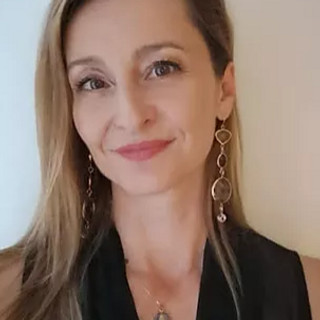
- 5 juin
- 9 min de lecture
Four Ukrainian films on the Oscars 2026 shortlists. A documentary winning the Berlinale Panorama Audience Award. A Loznitsa thriller unfolding in two languages that the world is only beginning to distinguish. The moment has come — and it demands translators who understand not just the words, but the weight behind them.
Table of contents
A new wave that cannot wait
Something is happening in cinema right now that would have been unimaginable a decade ago. Four films connected to Ukraine have made it onto the Oscars 2026 shortlists. At Berlinale 2026, the Ukrainian documentary Traces — co-directed by Alisa Kovalenko and Marysia Nikitiuk — made its world premiere in the Panorama section, winning the Panorama Audience Award for Documentary Film. And Sergei Loznitsa, the master of cinematic memory, has released Two Prosecutors — a haunting thriller that unfolds in Russian and Ukrainian with English subtitles, running 118 minutes of moral and historical tension.
This is not a trend. It is a reckoning.
And every single one of these films — every frame, every line of dialogue, every silence between words — must pass through the hands of a translator before it can reach a French audience. Not just any translator. One who knows what it means when a character switches from Ukrainian to Russian mid-sentence. One who understands that in 2026, that switch carries the entire weight of a war.
I am that translator. And I want to tell you why this moment changes everything about my work.
Two languages, one screen — and everything at stake
Loznitsa's Two Prosecutors is a masterclass in linguistic and political ambiguity. The film is directed by Sergei Loznitsa and set in a world of Soviet-era moral corruption, told in both Russian and Ukrainian. For a French subtitler or dubbing director who has never lived in the post-Soviet space, these two languages might seem interchangeable — close cousins, perhaps even dialects of the same tongue.
They are not.
I remember the first time I understood this viscerally — not academically, but in my bones. I was in Kyiv in the early 2000s, sitting in a kitchen in the Podil neighbourhood, listening to two friends argue about which language to speak to each other. One had grown up Russian-speaking in Kharkiv; the other was a Galician who had learned Ukrainian before she learned to read. Between them, they negotiated a shared world in real time. The language was never neutral. It never is.
Ukrainian documentary is forging a phenomenon unlike any other on the world's cinematic landscape, as the Docudays UA programme director has written — and that phenomenon is arriving in French post-production studios right now, asking for translators who can navigate not just grammar, but geopolitics.
When a character in Traces or 2000 Meters to Andriivka says something in Ukrainian, the choice of that language — and not Russian — is itself a political act, a cultural declaration, sometimes an act of survival. To flatten that into a generic "Eastern European" register in a French voice-over is not a translation error. It is an erasure.
When the gulag comes back on screen
Vladimir Kara-Murza, sentenced to 25 years for "high treason" after publicly denouncing Russia's invasion of Ukraine, described the harsh conditions in solitary confinement in a Siberian penal colony. He was freed in August 2024 in what was called the largest prisoner exchange between Russia and the West since the Cold War. Less than two years later, he stands before the United Nations in Geneva, delivering a powerful plea from someone who went from a maximum-security Siberian prison to the world stage.
This is not history. This is the news feed.
And this is why, when I sit down to translate a documentary about political prisoners in Russia — or to subtitle a film in which a Ukrainian director who once sat in a Russian jail, like Oleg Sentsov, tells his story — I am not working with abstract material. I am working with living memory. My doctoral research on Aleksandr Solzhenitsyn's The Gulag Archipelago and Varlam Shalamov's Kolyma Tales was not merely an academic exercise. It was a long apprenticeship in the language of suffering, resistance, and the precise, dangerous weight of words spoken under totalitarian power.
Shalamov wrote that a writer must be "a person whose life has been shaped by the experience of the camps." He was talking about authenticity — the impossibility of faking proximity to that darkness. The same is true of translation. You cannot translate Traces — a documentary about sexual violence used as a weapon of war by Russian forces — without having spent years understanding what Russian state violence looks and sounds like from the inside. You cannot translate Kara-Murza's testimony without knowing the genealogy of that testimony: from Bukovksy to Gorbanevskaya, from Ratushinskaya to Marynovych, whom I had the extraordinary privilege of meeting in person.
> "You can resolve to live your life with integrity. Let your credo be this: Let the lie come into the world, let it even triumph. But not through me."
> — Aleksandr Solzhenitsyn
This sentence, in Russian, has a cadence that no French translation has ever fully captured. I know, because I have tried. That gap — between the original and the possible — is where the real work of the audiovisual translator lives.
The translator as witness
The current wave of Ukrainian cinema is not only aesthetically remarkable. It is morally urgent. 2000 Meters to Andriivka by Mstyslav Chernov has made the BAFTA 2026 shortlist, bringing frontline documentary filmmaking to the most prestigious awards circuits in the world. Traces tells the story of Ukrainian women's solidarity in the fight against war-related sexual violence and their commitment to justice.
These films will be screened in France. They will be dubbed, subtitled, and voiced-over for French television, streaming platforms, and theatrical release. The question is: by whom?
The combination of French, Russian, and Ukrainian in a single translator is genuinely rare. I know this not because I have been told so, but because I have spent years being the only person in the room who could catch a nuance in Ukrainian dialogue that had been mistranslated from Russian — or who could explain to a French directeur artistique why a specific term used by a Donbas character could not, under any circumstances, be rendered with a word that carried Soviet connotations.
Post-production laboratories working on this new wave of Eastern European cinema face a structural challenge: the demand for FR/RU/UK translators has exploded, while the supply of translators who combine linguistic fluency with genuine historical and political expertise remains desperately thin. A translator who has written a doctoral thesis on Gulag literature, who has met Vladimir Bukovsky and Natalia Gorbanevskaya, who has lived in Ukraine and understands the difference between a Kyiv intellectual's Ukrainian and a Donbas miner's Russian — that profile does not come from a translation agency database.
It comes from a life lived at the intersection of languages, cultures, and histories.
📊 4 films - Ukrainian films on Oscars 2026 shortlists
Why this moment is different
There is something I want to say directly to the post-production professionals reading this — the coordinators, the artistic directors, the heads of dubbing laboratories who are right now looking at their upcoming slate and wondering how to handle a film that switches between Russian and Ukrainian every ten minutes.
This is not the same challenge as translating a Spanish film with Catalan inserts, or a Belgian film with Flemish dialogue. The Russian-Ukrainian linguistic boundary is, right now, a front line. Every word spoken in one language rather than the other is a choice that was made under pressure — historical, political, sometimes existential. To translate that choice faithfully into French requires someone who understands why it was made.
Anna Politkovskaya, the Novaya Gazeta journalist who was murdered on October 7, 2006 — Vladimir Putin's birthday — was renowned for her critical coverage of the Chechen-Russian conflict. Her work, and the work of the journalists who followed her at Novaya Gazeta, taught me something essential about the Russian language under pressure: it can be a weapon, a shelter, or a cry for help, depending entirely on who is speaking it, to whom, and under what sky.
When I translate a documentary in which a Ukrainian survivor speaks Russian — because that is the language she grew up in, the language in which she was violated, the language in which she now testifies — I carry all of that. The French audience will never know the layers I navigated to bring them that one sentence. That is the job. That is the craft.
Dostoevsky wrote, in The Brothers Karamazov, that beauty will save the world. I have always believed that translation — faithful, rigorous, deeply human translation — is one of the forms that beauty takes. It is not a technical service. It is an act of witness.
Conclusion: the screen is a border. i help people cross it.
We are living through a moment when Ukrainian cinema is speaking to the world with a clarity and urgency that demands to be heard — in French, in English, in every language that has a cinema screen and an audience willing to look. The translators who will carry these films across the linguistic border are not interchangeable. The history, the politics, the literature, the lives — they all travel with the words.
If you are a post-production laboratory, a documentary distributor, or a streaming platform working with Russian or Ukrainian content, I invite you to visit www.marieaude.paris to learn more about my work and discuss your project. The films are ready. The stories are urgent. Let's make sure the translation is equal to them.
And if you are a reader who has come here out of curiosity — about cinema, about Ukraine, about the strange and essential craft of moving words between worlds — I hope this article has shown you that a translator is never just a technician. She is a passeuse: a carrier of meaning, of memory, of humanity itself.
Questions fréquentes (FAQ)
What makes russian-ukrainian audiovisual translation different from other language pairs?
Russian and Ukrainian are related Slavic languages, but in the current geopolitical context, they carry radically different cultural and political weight. In films and documentaries produced since 2014 — and especially since 2022 — a character's choice to speak Ukrainian rather than Russian (or vice versa) is never linguistically neutral. It reflects identity, resistance, trauma, or allegiance. A translator working on these films must understand this dimension to render the original faithfully in French, rather than flattening two distinct voices into one.
Why does a post-production laboratory need a specialist for russian-ukrainian content, rather than a general translator?
The combination of French, Russian, and Ukrainian in a single audiovisual translator is extremely rare. Beyond linguistic fluency, films dealing with the war in Ukraine, Soviet history, or the dissident tradition require a translator with deep historical and political expertise. Errors in this domain are not just linguistic — they can misrepresent testimony, distort historical fact, or inadvertently reproduce propaganda frameworks. A specialist brings both technical subtitling/dubbing skills and the cultural knowledge to navigate these sensitivities.
What types of audiovisual content require french-russian-ukrainian translation expertise?
The demand is currently highest for: war documentaries (frontline footage, survivor testimony), political films and biopics (dissidents, journalists, activists), historical dramas set in the Soviet or post-Soviet period, and festival films from Eastern Europe that combine both languages. With four Ukrainian films on the Oscars 2026 shortlists and a major wave of documentary filmmaking reaching international distributors, the volume of content requiring this rare language combination is growing rapidly.
What is the connection between gulag literature and contemporary audiovisual translation?
The literary tradition of Soviet dissidence — from Solzhenitsyn's The Gulag Archipelago to Shalamov's Kolyma Tales — established a precise, spare, morally exacting language for describing state violence and human resistance. Contemporary Ukrainian and Russian documentary filmmakers working in this tradition use language with the same precision. A translator who has studied this literature at doctoral level brings a sensitivity to register, tone, and historical resonance that is impossible to acquire from a dictionary alone.
How can i contact marie-aude for a french-russian-ukrainian audiovisual translation project?
You can discover Marie-Aude's full profile, areas of expertise, and contact details at www.marieaude.paris. She works with post-production laboratories, documentary distributors, streaming platforms, and cultural institutions on subtitling, dubbing adaptation, and voice-over projects in French, Russian, and Ukrainian.
Chiffres clés
📊 4 films connected to Ukraine on the Oscars 2026 shortlists — a historic first for Ukrainian cinema (Source: Ukrainian MFA, 2026)
🎬 Berlinale 2026 — the Ukrainian documentary Traces wins the Panorama Audience Award, screened in Ukrainian with English subtitles (Source: Berlinale Official Programme, 2026)
🔒 25 years — the sentence handed to Vladimir Kara-Murza for denouncing Russia's invasion of Ukraine, before his release in the 2024 prisoner exchange (Source: Randolph-Macon College / France 24, 2024)
💡 FR/RU/UK — one of the rarest language combinations in European audiovisual translation, increasingly in demand as Eastern European cinema reaches global distribution circuits
📊 4 films shortlisted - Ukrainian cinema at Oscars 2026
> "Ukrainian documentary is forging a phenomenon unlike any other on the world's cinematic landscape"
> — Docudays UA Programme Director Yulia Kovalenko
> "Kara-Murza sentenced to 25 years for high treason after denouncing Russia's invasion of Ukraine"
> — Randolph-Macon College lecture report
Commentaires